
Table of Contents
Last Updated: Oct 21, 2026
Why Starting a Fitness Habit Feels Hard (and How to Make It Easier)
Learning how to start a fitness habit in Pittsburgh doesn't have to feel overwhelming. Most people quit within the first few weeks because they try to do too much too fast. They pick an intense program, commit to going five days a week, and burn out before they see results.
The real barrier isn't willpower. It's that beginners often start in the wrong environment or with a routine that doesn't match their life. When you choose a supportive space and a realistic plan, everything changes.
At Platinum Fitness Center, we believe in helping people build lasting fitness habits. The ones who succeed often start small, pick a gym where they feel welcome, and stick with a routine they can actually maintain. That's the approach we'll cover here.
Choose the Right Environment to Start Your Fitness Habit
Your gym choice matters more than most people realize. A big-box facility with hundreds of machines and aggressive fitness enthusiasts can feel intimidating. You walk in, see people lifting heavy weights, and immediately feel out of place.
A supportive gym environment changes everything. Look for a space where:
Staff greet you by name and remember your goals
Classes include people of all fitness levels, not just advanced athletes
The facility is clean, organized, and well-maintained
Equipment works properly and isn't crowded during your preferred times
There are no hidden fees or surprise charges when you sign up
Platinum Fitness Center offers exactly this kind of environment. It's a neighborhood gym in Pittsburgh that caters to beginners, seniors, and families who want to build fitness habits without judgment. The facility includes diverse group fitness classes, personalized coaching, and a community that supports your progress.
When you find the right gym, showing up becomes easier. You're not fighting against the environment anymore.
Build a Beginner Workout Routine You'll Actually Stick With
A beginner workout routine should be simple enough to remember and realistic enough to fit into your schedule. Complexity kills consistency. The best routine is the one you'll actually do.
Here's what a sustainable beginner routine looks like:
Frequency: 3 days per week (we'll explain why below)
Duration: 30-45 minutes per session
Structure: Warm-up (5 minutes) + main workout (25-35 minutes) + cool-down (5 minutes)
Intensity: Moderate effort, not maximum effort
A simple beginner routine might include:
Monday: 10 minutes walking on a treadmill, 20 minutes using weight machines, 5 minutes stretching
Wednesday: 10 minutes on a stationary bike, 20 minutes strength exercises with light dumbbells, 5 minutes stretching
Friday: 10 minutes rowing machine, 20 minutes group fitness class (yoga, Zumba, or another option you enjoy), 5 minutes stretching
This routine hits all the major fitness areas: cardio, strength, and flexibility. It doesn't require you to become an expert. And it leaves room for adjustment as you progress.
Many beginners make the mistake of copying advanced routines they find online. That's a fast way to get injured or burned out. Start with what your body can handle. Progress comes naturally once you build consistency.
How Often Should Beginners Work Out
How often should beginners work out? Three days per week is the ideal starting point for most people.
This frequency gives you:
Enough stimulus to build strength and endurance, three sessions per week is enough to trigger fitness adaptations in your body
Enough recovery time, your muscles grow and adapt during rest days, not during the workout itself
A realistic schedule, most people can commit to three days per week without major life disruption
Room to add more later, once three days becomes routine, you can increase to four or five if you want
Two days per week is too infrequent for noticeable progress. Five or six days per week is too much for beginners and leads to burnout.
The spacing matters too. Don't do all three workouts back-to-back. Space them out:
Monday, Wednesday, Friday works well
Tuesday, Thursday, Saturday also works
Any pattern with at least one rest day between sessions is fine
Your body needs that recovery time. If you try to work out every day as a beginner, you'll feel exhausted, your performance will suffer, and you'll be more likely to quit.
First Day at the Gym Tips for Confidence
Your first day at the gym sets the tone for everything that follows. If you feel welcome and supported, you'll come back. If you feel lost or judged, you probably won't.
Here are practical tips to make your first day easier:
Arrive early. Go during a quieter time so the gym isn't packed. This gives you space to figure things out without feeling rushed or watched.
Wear comfortable clothes. You don't need special gym gear. Wear whatever lets you move freely. T-shirt and shorts work fine.
Bring water. Stay hydrated during your workout. It's simple but easy to forget.
Ask for a tour. When you arrive, ask a staff member to show you where the equipment is. Don't be shy about this. It's their job, and they expect it. (Source: National Institute on Aging's recommendations for older adults)
Start with machines. Machines are easier to use than free weights when you're learning. They guide your movement and feel less intimidating.
Skip the heavy weight. Use light weight on your first day. Focus on learning the movement, not lifting heavy. You can increase weight next week.
Take a group class. If Platinum Fitness Center offers classes you're interested in, try one. Classes provide structure, instruction, and community all at once.
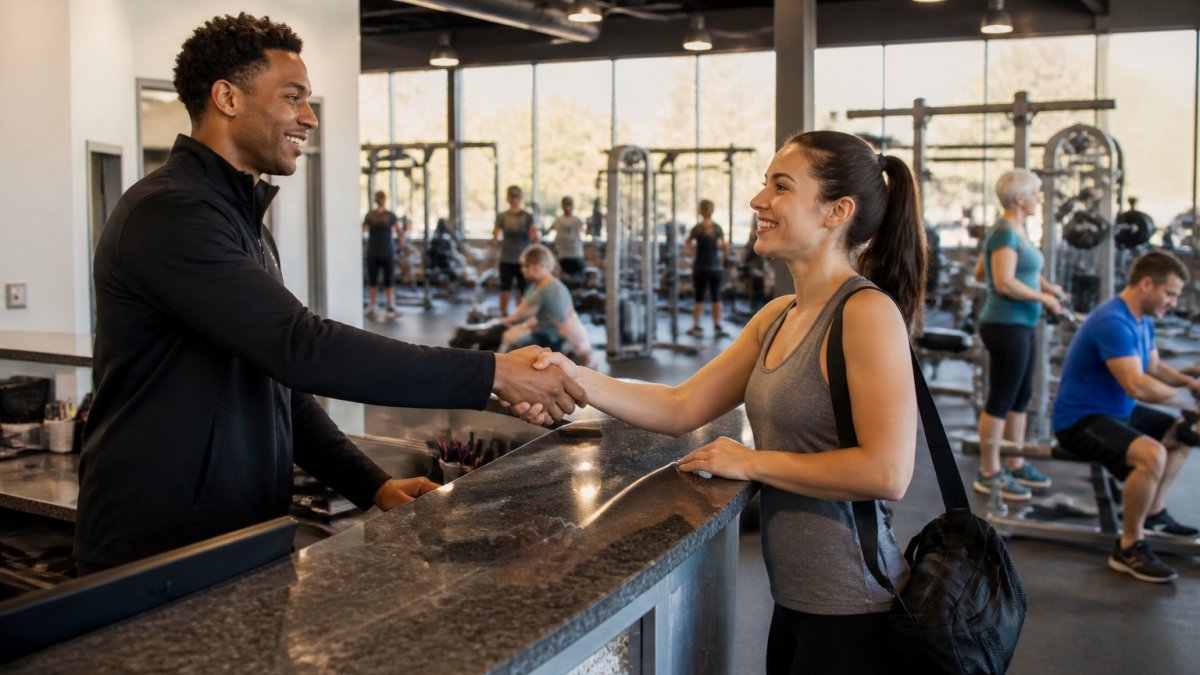
Welcoming gym environment with friendly staff greeting a new member at the front desk, showing a clean, well-lit facility with diverse equipment and people of different ages and fitness levels working out comfortably
Talk to other people. Most gym members are friendly and remember what it felt like to be new. A simple conversation can ease your nerves and help you feel like you belong.
The staff at a good gym understand that beginners feel nervous. They'll make it easy for you. If they don't, that's a sign the gym isn't the right fit.
How to Stay Motivated to Exercise When Progress Feels Slow
Progress in fitness isn't always visible. You might not see a change in the mirror for weeks. But your body is adapting inside, even when you can't see it yet.
This is where most people quit. They expect dramatic results in two weeks and feel discouraged when they don't appear.
How to stay motivated when progress feels slow:
Track small wins. You might not lose weight this week, but you probably got stronger. Did you lift heavier? Did you do more reps? Did you have more energy afterward? Write these down.
Set process goals, not just outcome goals. An outcome goal is "lose 20 pounds." A process goal is "work out three days per week for the next month." You control process goals. You can't always control outcomes.
Find a workout you enjoy. If you hate running, don't run. Try cycling, swimming, dancing, or strength training. You'll stick with something you actually like.
Find your people. Work out with friends, join a group class, or find an accountability partner. Community makes a huge difference. When others are counting on you, you show up.
Celebrate small milestones. Did you complete your first week? That's worth celebrating. Did you try a new exercise? Celebrate that too. Don't wait for the big transformation.
Be patient with yourself. Real fitness changes take weeks and months, not days. Trust the process. Show up consistently, and the results will follow.
Many beginners underestimate how powerful consistency is. Small effort repeated over time creates big results.
Making Your Fitness Habit Stick Long Term
Understanding how to start a fitness habit in Pittsburgh takes time, but it becomes automatic once you stick with it long enough. Research suggests that habits typically take 2-3 months to feel natural. After that, going to the gym feels as routine as brushing your teeth.
Here's how to make your habit stick:
Make it automatic. Schedule your workouts at the same time on the same days. Don't decide whether to go. Just go. Your brain will start to expect it.
Remove friction. Pack your gym bag the night before. Keep your gym shoes by the door. The fewer obstacles between you and the gym, the more likely you'll go.
Build a ritual. Develop a pre-workout routine that signals to your brain that it's time to work out. Maybe it's a specific song you listen to on the way. Maybe it's a coffee you grab beforehand. Rituals make habits stick.
Track your attendance. Mark off each workout on a calendar. Seeing a chain of completed workouts is motivating. It also makes you less likely to break the chain.
Adjust as needed. If your routine stops working, change it. If you hate the time you chose, pick a different time. If a class bores you, try a different one. Flexibility keeps you engaged.
Find community. Regular gym members become familiar faces. You might recognize the same people in your classes. That familiarity builds belonging. At Platinum Fitness Center, the community aspect is built in. You're not just another member; you're part of a supportive group.
Celebrate consistency, not perfection. You don't need to be perfect. Missing one workout doesn't ruin your habit. Missing several in a row does. Focus on showing up most of the time, not all of the time.
The goal isn't to become obsessed with fitness. It's to build a habit that feels natural and sustainable. Once that happens, you'll keep going because it's part of who you are, not because you're forcing yourself.
Starting a fitness habit in Pittsburgh is absolutely achievable when you have the right environment and approach. A supportive gym, a realistic routine, and consistent effort are all you need. Platinum Fitness Center provides exactly what beginners need: a clean, welcoming facility with personalized coaching, group fitness classes, and a community that supports your goals. The American Heart Association recommends 150 minutes of moderate-intensity activity per week for adults, and starting with three 30-45 minute sessions per week gets you on track. Contact Us today to find out how we can help you build a fitness habit that lasts.
Frequently Asked Questions
How do I start a fitness habit as a complete beginner?
Begin by choosing a supportive environment where you feel comfortable, not intimidated. Start with 2-3 workouts per week at a manageable intensity. Pick activities you actually enjoy, whether that's group classes, walking on a treadmill, or strength training. Set a specific time and place for your workouts to build consistency. Most importantly, focus on showing up regularly rather than being perfect. Small, consistent actions build the habit faster than sporadic intense efforts.
How many days a week should beginners work out?
Most beginners should aim for 2-3 days per week when starting out. This frequency gives your body time to recover while building consistency without overwhelming yourself. Space workouts at least one day apart to allow muscles to rest. As your fitness improves over several weeks, you can gradually increase to 4-5 days per week. The best schedule is one you can maintain long term, consistency matters more than intensity when you're building a new habit.
What should I do on my first day at the gym?
Arrive 10-15 minutes early to familiarize yourself with the layout and meet staff. Ask for a brief orientation of equipment locations and basic safety guidelines. Start with light cardio or stretching to warm up. Try one or two exercises at a comfortable weight or resistance level. Keep your first workout short, 20-30 minutes is plenty. Focus on learning proper form rather than pushing hard. Take note of what equipment you used so you can repeat it next time, building confidence through familiarity.
How can I stay motivated to exercise when I don't see immediate results?
Track non-scale wins: increased energy, better sleep, clothes fitting differently, or simply feeling stronger. Join group fitness classes where community and social connection keep you accountable. Set process goals (showing up 3 times per week) instead of only outcome goals (losing 10 pounds). Find an activity you genuinely enjoy, not one you think you should do. Consider working with a coach for personalized guidance and accountability. Celebrate small milestones, completing your first week, trying a new class, or increasing your weight, to maintain momentum.
Was this article helpful?